Wallpapering period walls in Kent: how to hang paper on uneven plaster without damage
Wallpapering period homes in Kent takes more than good paper. We explain how to prepare old plaster, match patterns and protect original features for a lasting finish.
Why Period Homes in Kent Demand a Different Approach to Wallpapering
Old walls are rarely flat. If you live in a Victorian terrace, an Edwardian semi or a converted oast house somewhere across Kent, you already know this. The walls move slightly with the seasons, the plaster has probably been patched a dozen times over the decades, and the corners are rarely truly square. Hang paper without accounting for all of that and you will see every imperfection within a week.
Wallpapering period homes in Kent is genuinely satisfying work when it is done properly. But it requires patience, preparation and an honest assessment of what the walls are actually like before a single length is cut. This article walks through what we look at, what we do and why it matters.
Did Victorian and Edwardian Houses Have Wallpaper?
They did, extensively. Wallpaper was a dominant interior choice throughout the Victorian and Edwardian eras, and many Kent properties still carry evidence of it: layers of old paper under subsequent coats of paint, faded pattern impressions in the plaster, or the occasional strip that resurfaces when you strip a wall back. It was used in hallways, parlours, dining rooms and bedrooms, often with dado rails dividing the wall into separate decorative zones.
That history is worth knowing because it shapes what you find when you start work. Multiple layers of old paper, or paint applied directly over paper, create a surface that needs careful assessment before anything new goes up. Hanging fresh wallpaper over existing paper is something we would never do. The weight of new paper causes old adhesive to fail, and you end up with bubbles, peeling seams and, in the worst cases, large sections pulling away from the wall altogether.
Stripping and Surface Preparation: The Part That Takes the Time
The preparation stage is where most of the work happens, and it is where corners are most often cut. On period properties, that is a costly mistake.
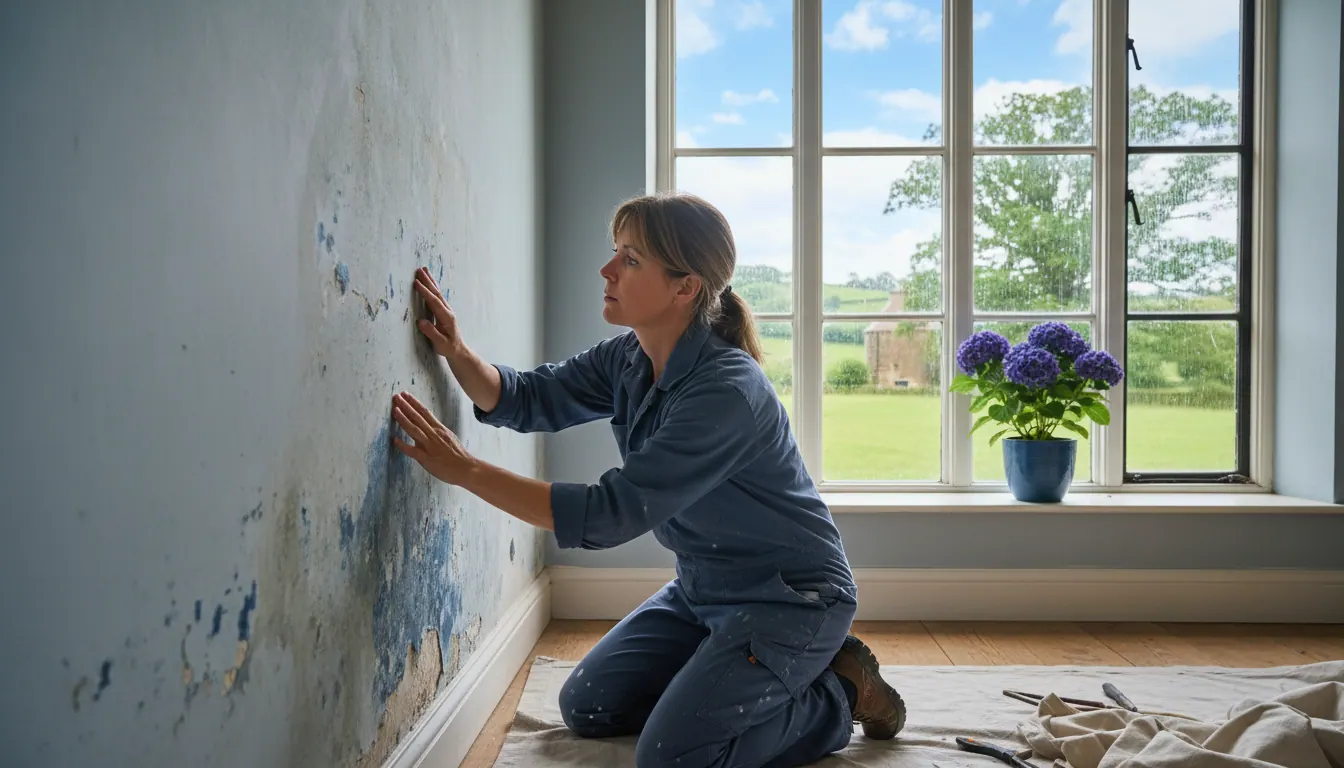
Old plaster is porous and often soft in patches. Once stripped, walls may reveal:
- Hairline cracks from decades of movement in the structure
- Areas where previous repairs have left proud patches or dips
- Friable plaster that will not hold adhesive without treatment
- Old paint or size that has hardened and sealed the surface unevenly
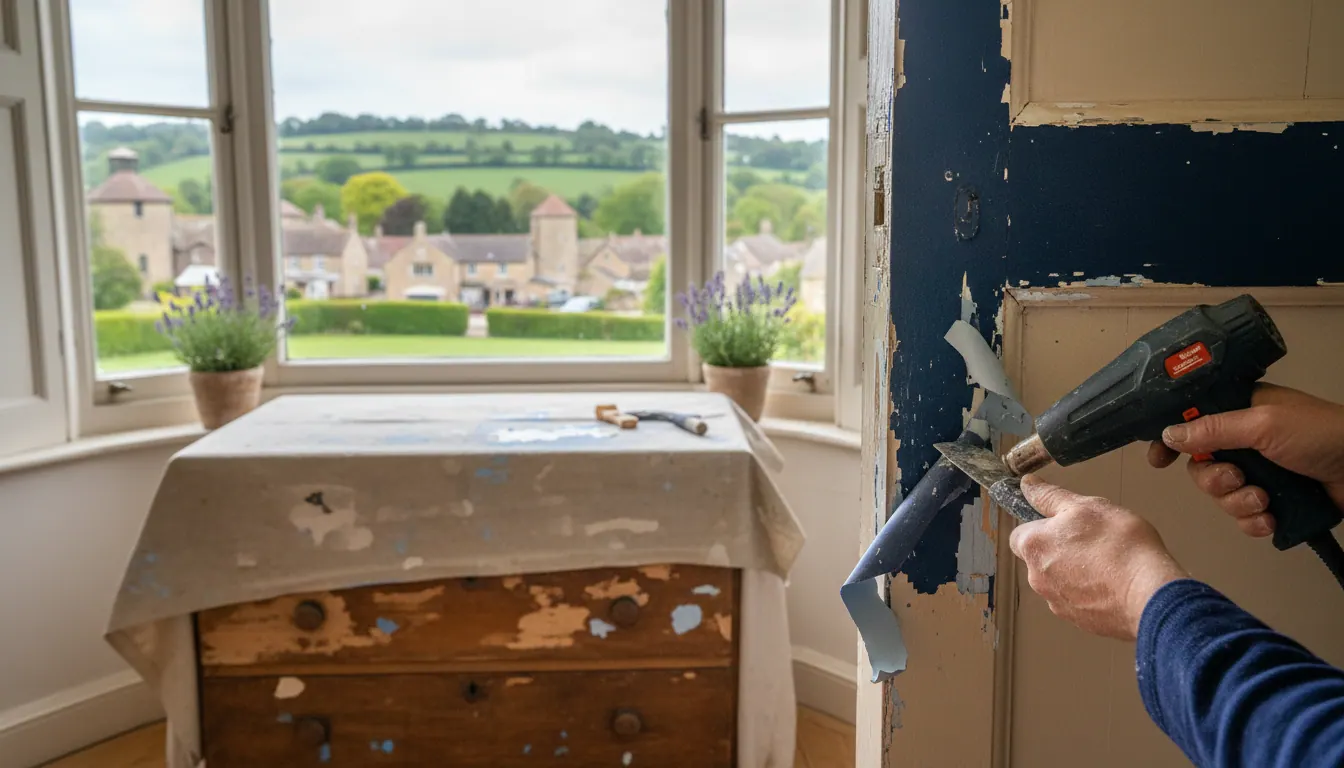
Before we hang anything, we address all of this. Cracks are filled and allowed to dry fully. Soft or powdery areas are treated with a stabilising primer. The whole wall is sized, which regulates how much moisture the plaster draws from the paste and gives us a workable open time to position each length correctly.
One thing worth saying plainly: if a wall has significant plaster failure, deep structural cracks or active damp, that needs to be sorted by the appropriate trade before decorating starts. We are painters and decorators, not plasterers or damp-proofers. Getting us in over a wall that is not ready just means the work fails prematurely. We will always tell you if we think something needs attention first.
For more on reading a wall before you start, our article on damp walls and old plaster: what a decorator needs to know before you start painting covers the key checks in detail.
Choosing the Right Paper for a Period Property
Paper choice matters more than most people realise, and it matters differently on an old building.
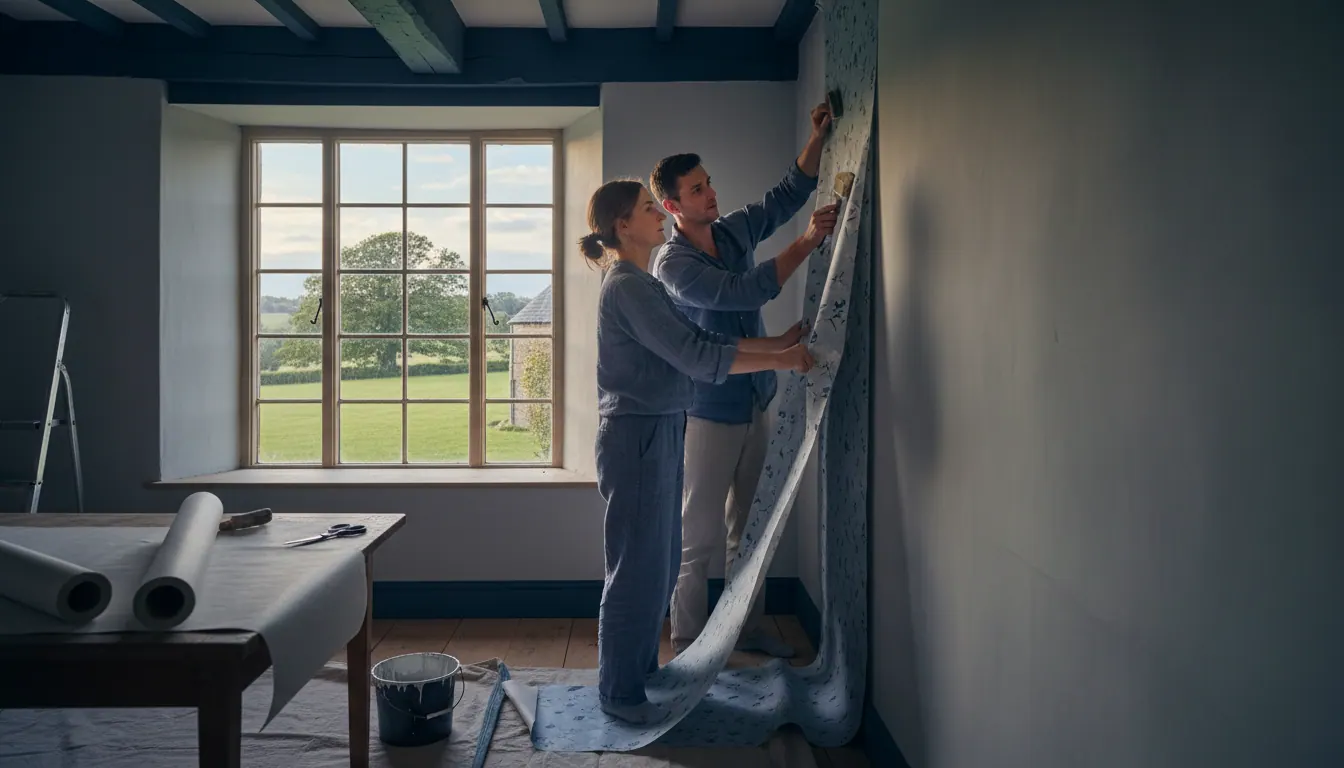
Heavy-weight papers, including paste-the-wall vinyls, can work well but they are less forgiving on uneven surfaces. A slightly softer, paste-the-paper option often conforms better to walls that are not perfectly flat. Lining paper is almost always worth hanging first on a period wall, horizontally (cross-lining), before the top paper goes up. It smooths out minor undulations and gives a consistent surface for adhesion.
Pattern matching on large repeats needs careful planning. Rooms in Victorian and Edwardian houses often have high ceilings, which means long drops and significant pattern repeat waste. We calculate this before ordering so there are no shortfalls mid-room.
A few things we consider for every period property job:
- Paper weight and flexibility. Heavier is not always better on old plaster.
- Seam type. Butt seams are standard, but on textured or embossed papers the seam needs pressing carefully to avoid a visible ridge.
- Paste compatibility. Different papers need different pastes, and using the wrong one affects open time and final adhesion.
- Ceiling height. High ceilings are common in Victorian properties. They change the logistics of hanging significantly.
Original Features: Working Around Dado Rails, Picture Rails and Deep Architrave
One of the things we genuinely enjoy about working on period homes across Kent is the original woodwork. Deep skirtings, moulded architrave, picture rails, dado rails, ceiling roses: these features are worth preserving, and wallpapering around them properly takes care.
Paper needs to be trimmed cleanly to the edge of each moulding. Rushing this, or leaving a gap, looks poor immediately. We use a broad knife and sharp blade to score and trim against the profile, working slowly. On intricate mouldings, it sometimes takes a few attempts to get a clean line.
Where a room has a dado rail, the choice of whether to paper above the rail, below it, or both changes the feel of the space entirely. A darker, heavier paper below the dado with a lighter paper or paint above is a classic Victorian approach that still works well in the right room.
What One Customer Said
We take real pride in the relationships we build while working in people's homes, particularly when a client cares deeply about the quality of the work.
bill came and done a job for my grandad who is very particular with how things are done being once in the trade himself but too old to do it himself now. bill was very kind and polite towards my grandad and would definitely use him again thanks bill brilliant job done, Jazmyn Mary Alice Mansfield, via Facebook
That kind of attention, treating someone's home and their standards with genuine respect, is exactly how we approach every job. A homeowner who knows the trade is, if anything, the best person to work for. They notice the preparation, the clean lines and the tidying up at the end of the day.
Does Wallpaper Devalue a House?
This question comes up often, and the honest answer is: it depends entirely on the paper and how it is hung.
Poorly hung paper, paper over paper, or a bold pattern that dates quickly can put buyers off. But well-hung paper, especially in a period property where it suits the architecture, adds character and finish that painted walls sometimes lack. A properly papered hallway in a Victorian terrace, with a complementary paint colour on the woodwork, can look genuinely impressive.
The key is that it is hung correctly, on a properly prepared wall, with clean seams and tidy edges. That is what holds its value, both visually and structurally.
Frequently Asked Questions
Can you wallpaper over old paper that has been on the wall for 20 years or more?
We would not recommend it, and we would not do it. Old paper may have lost adhesion in places, absorbed moisture unevenly or shrunk slightly over time. New paste and the weight of fresh paper can cause it to lift, bubble or peel away from the wall. The right approach is to strip back to the plaster, assess the surface properly, then prepare and size before hanging anything new. It takes longer, but it is the only way to get a finish that lasts.
Did Victorian houses really have wallpaper, and is it appropriate to use it again now?
Absolutely. Wallpaper was central to Victorian and Edwardian interior design, and many original Kent properties had elaborate papers in their main reception rooms. Using wallpaper in a period home today is not a trend chasing exercise: it is historically appropriate and, when chosen carefully, enhances rather than fights the architecture. Pattern, scale and colour all need to suit the proportions of the room, which is worth thinking through before you order.
What are the current wallpaper trends for UK period homes?
Botanical and nature-inspired prints continue to be popular in period properties, as do large-scale geometric patterns that reference Arts and Crafts and Art Nouveau design. Textured papers, including grasscloth-effect and linen-look options, work well in rooms where you want warmth without a strong pattern. Deep, saturated colours as a background to a subtle pattern are also widely used in dining rooms and hallways. That said, trends matter less in a period home than proportion and fit: a paper that suits the room and the architecture will outlast any fashion cycle.
Do you wallpaper just one feature wall, or whole rooms?
Both, and the choice depends on the room and what the client wants to achieve. A single papered wall can work well as a focal point, particularly behind a fireplace breast or a bed head. Whole-room papering in a period property, particularly a hallway or a formal dining room, gives a more complete, considered result. We are happy to talk through what would work best for a specific room before any decisions are made. Our article on feature walls and paint effects: what actually works in Kent homes and rentals goes into the feature wall question in more detail.
Getting Wallpapering Right in a Kent Period Home
Wallpapering period homes in Kent is work we take seriously. The houses deserve it: the proportions, the original features and the character of the rooms are genuinely worth getting right. That means taking time over the preparation, choosing materials that suit the surface, and working carefully around everything the original builders put there.
If you have a period property across Kent and are thinking about wallpapering, whether it is a single room or a whole house, we are happy to take a look and give you an honest assessment. Quotes are free and carry no obligation.
Get in touch with us and we will go from there.