Exterior timber and weatherboard: why flexible paint and proper lap coverage protect Kent homes
Weatherboard painting in Kent done properly: preparation, the right coatings and clean results. BR Painting & Decorating. Free, no-obligation quotes.

Weatherboard and Kent's weather: a combination that demands respect
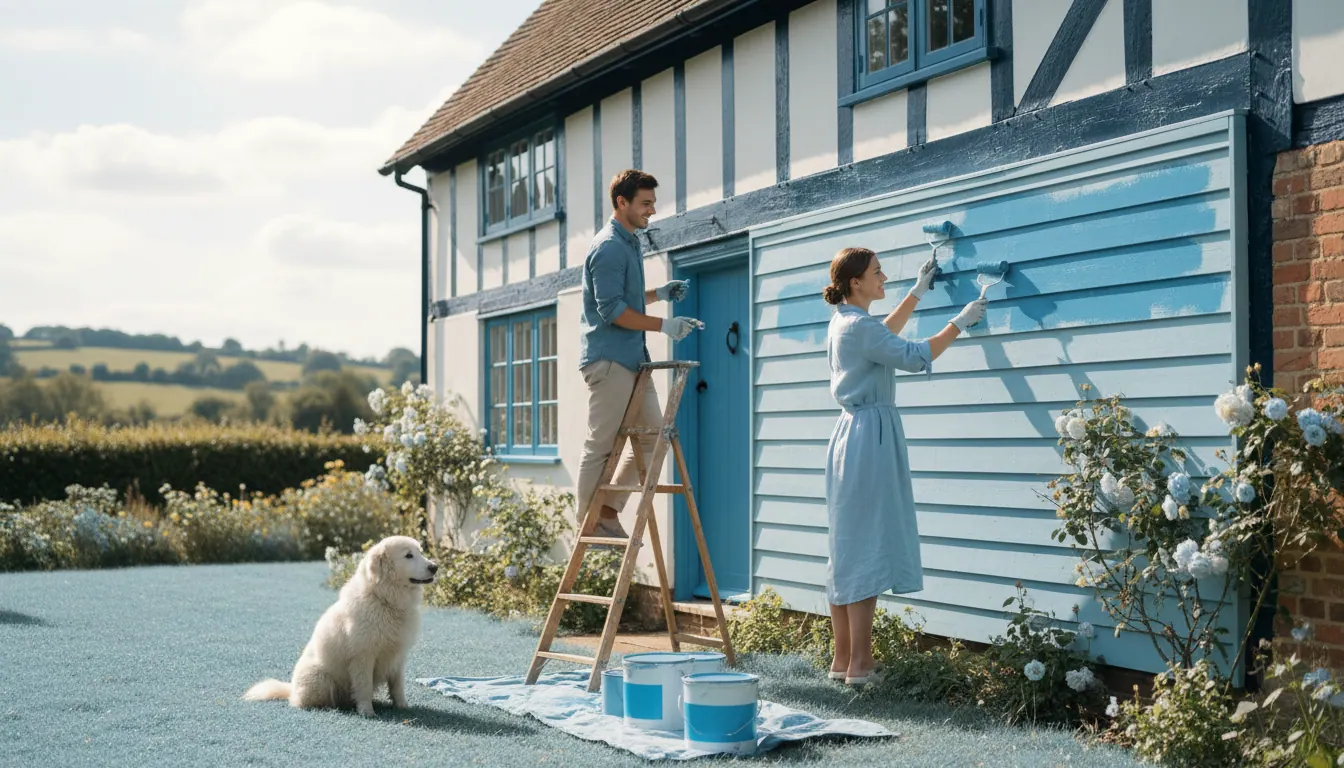
Timber-clad houses are a familiar sight across Kent. From the older weatherboard cottages that line rural lanes to the Victorian and Edwardian terraces with their painted timber frontages, these buildings have real character. But that character comes with maintenance. Weatherboard is exposed to everything Kent's climate throws at it: wet winters, the occasional sharp frost, and the drying heat of a south-facing summer elevation. When the paint film fails, water gets behind the boards, and the timber starts to suffer.
We take weatherboard painting seriously because the stakes are higher than they are with an interior wall. Get the preparation wrong, rush the coats or use the wrong product, and you will be back on ladders within two or three years. Do it properly, and a well-painted weatherboard elevation can look good and stay protected for many years.
This article explains how we approach the work, what makes weatherboard different from masonry or render, and what Kent homeowners should think about before the job starts.
Why weatherboard painting in Kent is not the same as painting a brick wall
Masonry and render are relatively static surfaces. Timber moves. It expands in wet weather and contracts in dry spells, and that constant movement is what puts pressure on the paint film. A coating that has no flexibility will crack at the laps and along the grain, letting moisture in at exactly the points where it can do the most damage.
This is why product choice matters. A hard, brittle coating that might work perfectly well on a sheltered interior door is not the right choice for an exposed south-westerly elevation in Kent. We use exterior-grade coatings that are formulated to flex with the timber rather than fight it. That typically means a satin or semi-gloss finish with good elasticity and strong adhesion.
The laps between boards deserve particular attention. Water runs down the face of the boards and tends to collect at the overlap. If the paint film is thin or poorly applied at those edges, water will wick in underneath. We make sure those areas are properly primed and that the finish coats are worked well into the laps, not just brushed across the face.
Preparation: the part that decides whether the job lasts
No amount of good paint will save a badly prepared surface. On weatherboard, preparation usually involves several stages.
Cleaning. Before anything else, the boards need to be clean. Algae, moss and dirt are common on north-facing or shaded elevations across Kent. A dirty surface stops paint from adhering properly, so we clean it down thoroughly and allow it to dry before we start.
Assessment. We look carefully at the existing paint film. Flaking or peeling paint has to come off. If it is left underneath a new coat, the new coat will fail at the same rate as the old one. On older properties, there may be multiple layers of paint built up over decades, and those layers can cause problems of their own. Where the existing paint is sound and well-adhered, we can work over it. Where it is not, it comes off.
Timber condition. This is where we will always be honest with a customer. If a board is soft, spongy or showing signs of rot, that is a joinery or carpentry issue, not a decorating one. We will point it out clearly and recommend it is dealt with by the right trade before we paint. Painting over rotten timber does not fix the timber; it hides the problem and makes it worse. Once any necessary repairs are done, we prime all bare timber properly before the finish coats go on.
Filling and caulking. Gaps at joints and around frames are sealed before painting. This is not just cosmetic; gaps are entry points for water.
If you want to understand more about why preparation is the single biggest factor in how long a finish lasts, our article Why preparation beats paint: the difference between a finish that lasts and one that fails goes into this in detail.
Colour choices for weatherboard homes in Kent
Colour is a genuinely interesting conversation on weatherboard houses. The traditional palette in Kent tends towards whites, creams and soft greys, and those colours work well because they show off the horizontal lines of the boarding and sit comfortably against the brick, flint and tile that surrounds them.
That said, we are seeing more interest in deeper tones. Olive greens, warm charcoals and off-blacks have become popular on timber-clad elevations, and they can look very well considered on the right property. A deep colour on weatherboard does tend to absorb heat, which can accelerate the expansion and contraction cycle in summer. It is worth factoring that in when choosing a product, and it is another reason why flexibility in the coating matters.
What we would say is that colour choice on an exterior is a longer-term commitment than on an interior wall. The preparation and application time on a weatherboard elevation is significant, so it is worth being confident in the colour before the job starts. We are happy to talk through options.
Soffits, fascias and exterior timber alongside the boards
Most weatherboard houses also have painted soffits, fascias, bargeboards and window frames. It rarely makes sense to repaint the boards and leave the surrounding timber in poor condition. We usually look at the whole elevation together and agree with the customer what needs doing.
Soffits and fascias are often painted in a gloss or satin finish for durability and easy cleaning. Window frames need careful preparation around the glazing, with the glass protected and any old putty that is crumbling replaced before painting. These details matter. A well-painted house where the window frames are peeling looks unfinished. Getting the whole elevation right at the same time means the job holds together visually and practically.
What one of our customers said
We do not have a long list of reviews to quote from, but this one from Jazmyn Mary Alice Mansfield says something we think is worth sharing.
bill came and done a job for my grandad who is very particular with how things are done being once in the trade himself but too old to do it himself now. bill was very kind and polite towards my grandad and would definitely use him again thanks bill brilliant job done, Jazmyn Mary Alice Mansfield, via Facebook
Someone who has been in the trade themselves is often the hardest person to please. They know exactly what corners can be cut, and they notice when they have not been. That kind of feedback means a great deal to us.
Spring and autumn: the best windows for exterior work in Kent
Timing matters with exterior painting. The coating needs to be applied in dry conditions, within a reasonable temperature range, and with enough drying time between coats. Kent's springs and early autumns tend to offer the most reliable windows for this kind of work.
Late autumn and winter are possible on sheltered elevations, but they require careful judgement. Cold temperatures slow drying and can affect how the paint film forms. If you are thinking about getting a weatherboard elevation done before the weather turns, early autumn is often the right moment to book.
We have written more about timing and exterior conditions in our article on exterior painting in spring: preparing weatherboard and masonry for Kent's weather, which covers the same principles from the spring end of the calendar.
Frequently asked questions
How long should a good weatherboard paint job last in Kent? There is no single answer, because it depends on the aspect of the elevation, the quality of the preparation, the product used and the local conditions. A north-facing or shaded elevation in a damp part of Kent will need attention sooner than a well-drained, south-facing wall. As a general principle, a properly prepared and properly painted weatherboard elevation should give you several years of protection before it needs significant work again. Regular visual checks and prompt attention to any small areas of failure will extend that considerably.
Does weatherboard need a primer before the finish coats? Yes, always, on any bare or newly exposed timber. Primer seals the wood, improves adhesion and gives the finish coat something stable to bond to. Skipping the primer to save time is one of the most common reasons exterior paint jobs fail prematurely. On previously painted surfaces that are in good condition, a primer may not be needed across the whole surface, but bare patches and end grain always need it.
Can weatherboard be painted in any colour, or are some colours better than others? Any colour can be used, but there are practical considerations. Very dark colours absorb more heat, which increases the expansion and contraction of the timber and puts more stress on the paint film. This does not mean dark colours should be avoided, but it does mean the product needs to be chosen with that in mind, and touch-up maintenance may be needed slightly sooner. We are happy to talk through the options for your specific property.
Do I need to tell my insurer or get any permissions before repainting weatherboard? For a straightforward repaint in a similar colour, planning permission is not usually required. However, if your property is listed or sits within a conservation area, you may need to check with your local planning authority before making changes to the exterior appearance. We recommend doing that check before the job starts rather than after.
Ready to talk about your weatherboard?
If you have a timber-clad property across Kent and you are thinking about getting the exterior repainted, we would be glad to take a look. We offer free, no-obligation quotes and will give you a straight assessment of what the surface needs before any work begins. Quality finishes, lasting impressions. Happy to help.
Get in touch with us here and we can arrange a convenient time to visit.