Soffits and fascias: why exterior woodwork needs attention before the winter weather hits
Fascia painting in Kent done properly protects timber and uPVC from the elements. We explain what's involved and why preparation makes all the difference.


Why fascias matter more than most people realise
The fascia board runs along the bottom edge of your roof, carrying the guttering and sealing the gap between your roof structure and the outside world. It takes the full force of whatever Kent's weather throws at it: driving rain off the North Sea, frost, and the kind of damp that settles in for weeks at a time. Yet it is one of the most overlooked parts of a house exterior until something goes visibly wrong.
A well-painted fascia does two things. It protects the timber or substrate underneath from moisture getting in, and it gives the whole roofline a clean, finished look that lifts the appearance of the house from the street. A peeling, flaking fascia, on the other hand, signals neglect even when the rest of the property is in good order.
We cover fascia painting across Kent as part of a wider exterior decorating service, alongside soffits, bargeboards, exterior woodwork, and masonry. Here is what we think you should know before you book anyone to do the work.
Timber fascias: the preparation is everything
Many houses across Kent, particularly Victorian and Edwardian terraces, still have original or replacement timber fascias. Timber is a good material, but it is unforgiving if you skip the preparation stage.
Before a brush goes near the wood, we check the surface thoroughly. Any areas of soft, spongy timber need attention before painting starts. If the rot is minor and surface-level, it can sometimes be treated with a stabilising solution and a filler rated for exterior use. If the rot has gone deep into the board, that is a joinery job, not a decorating one. We will say so plainly rather than paint over a problem.
Once the surface is sound, the process looks like this:
- Sand back any flaking or peeling paint to a firm edge
- Clean the surface to remove dirt, algae, and any chalking from the old coating
- Apply a primer or undercoat suited to exterior timber
- Apply two full topcoats, working the paint into any end grain where moisture loves to enter
The end grain point matters more than people expect. The cut ends of a fascia board absorb moisture faster than any other part. Good coverage there is not optional.
For more on why preparation is the part that actually determines whether a finish lasts, see our article on why preparation beats paint: the difference between a finish that lasts and one that fails.
uPVC fascias: can they be painted?
Yes, and it is increasingly common. uPVC fascias were fitted on a huge number of homes across Kent from the 1980s onwards as a low-maintenance alternative to timber. They were often installed in white, which can look fine when new but yellows and greys over time in a way that is difficult to clean back to the original colour.
Painting uPVC is not the same as painting timber. The surface is non-porous, so adhesion is the key challenge. The preparation involves a thorough clean with a degreasing agent, followed by a light key to the surface and a dedicated primer formulated to bond to plastic. Skip any of those steps and the topcoat will peel within a season.
The right topcoat for uPVC is a flexible, water-resistant finish. Rigid coatings crack as the material expands and contracts with temperature changes, and once a crack opens, moisture gets underneath and the whole thing lifts. We use products suited to the substrate rather than reaching for a general-purpose exterior gloss.
Soffits and bargeboards: the same job, done together
Fascias rarely need attention in isolation. The soffit board sits just behind and beneath the fascia, closing off the gap between the wall and the roof. Bargeboards run along the gable end of a pitched roof. All three are exposed to the same conditions, and it makes sense to deal with them at the same time.
Working at height across a roofline takes the right access equipment and a steady hand. We take the time to mask guttering and any brickwork below to keep the job clean, and we work methodically across the full run rather than touching up in patches, which always shows.
Choosing a colour for your fascias
White and cream remain the most common choices across Kent, and for good reason. They read as clean and neutral against almost any wall colour or roof tile, and they show up dirt less than you might expect when the surface has a good semi-gloss or gloss finish that can be wiped down.
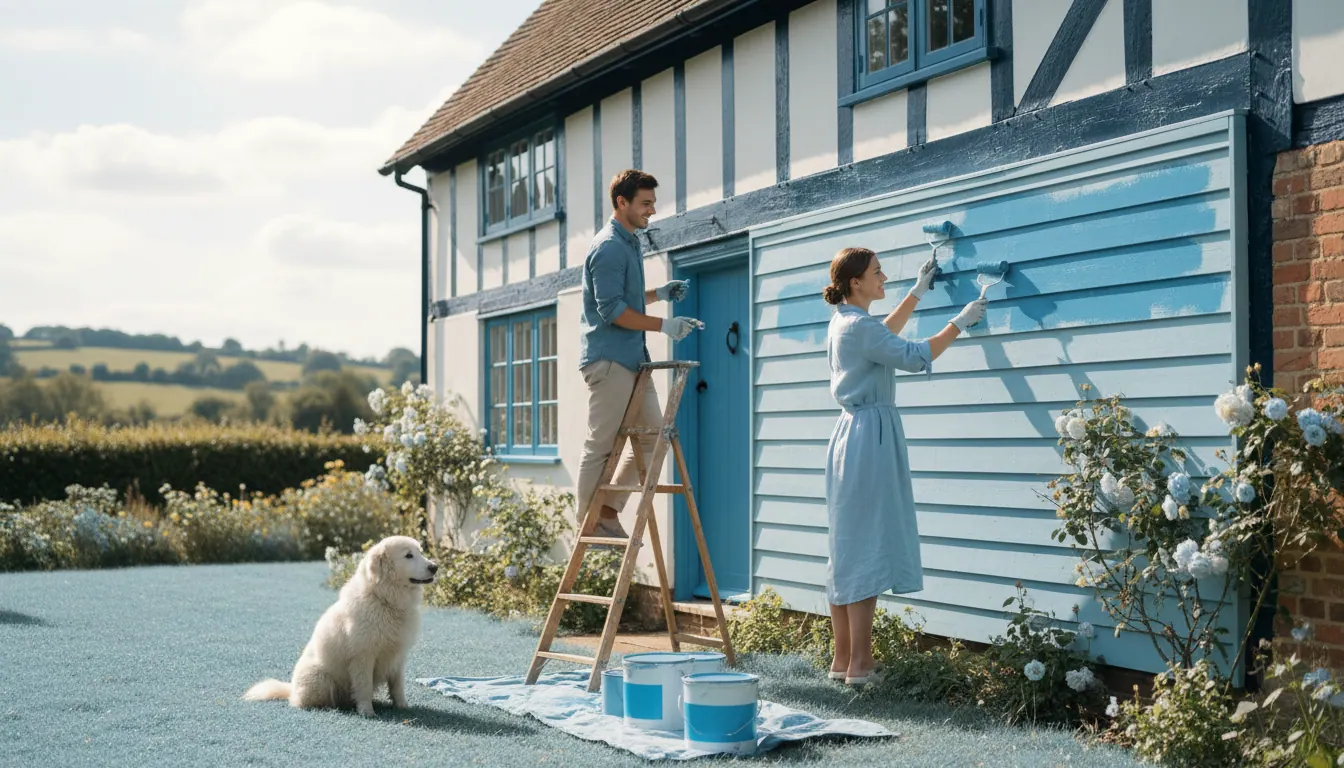
That said, we are seeing more interest in darker rooflines. Anthracite grey, deep charcoal, and even black fascias and soffits have become popular, particularly on newer builds and on period properties where the owner wants a sharper, more defined look. On a Kentish weatherboard house, a dark roofline against pale boarding can look very striking.
The practical consideration with dark colours is that they absorb heat, which means the substrate expands more on hot days. This is another reason why flexibility in the topcoat matters, and why two full coats are not a luxury but a minimum.
What a customer noticed
Bill came to work on a property for a customer whose grandfather had been in the trade himself. That kind of job, where the person in the house knows exactly what good work looks like, is one we take seriously.
bill came and done a job for my grandad who is very particular with how things are done being once in the trade himself but too old to do it himself now. bill was very kind and polite towards my grandad and would definitely use him again thanks bill brilliant job done
(Jazmyn Mary Alice Mansfield, via Facebook)
That combination of getting the work right and treating the person in the house with respect is something we think about on every job.
Exterior painting across Kent: timing matters
Autumn is a reasonable time to get exterior painting done in Kent, provided you pick your window carefully. Paint needs a dry surface and temperatures above roughly five degrees Celsius to cure properly. The shoulder season between summer heat and winter damp can actually be good conditions: cooler temperatures mean the paint does not dry too fast, which reduces the risk of brush marks and lap lines.
What you want to avoid is painting over a surface that has any moisture in it, painting in direct strong sunlight that dries the surface before the film has levelled, or applying a coat when rain is forecast within a few hours. We keep an eye on the forecast and plan accordingly rather than pushing on regardless.
If you are thinking about exterior work more broadly, our article on exterior painting in spring: preparing weatherboard and masonry for Kent's weather covers the seasonal preparation side in more detail.
The roofline and the rest of the exterior
Fascia painting rarely sits in isolation on a to-do list. Most homeowners asking about the roofline are also thinking about exterior window frames, doors, weatherboard cladding, or masonry. There is a logic to doing connected elements together: the colour decisions are easier, the access equipment is already up, and the finish reads as a considered whole rather than a patchwork of different jobs done at different times.
We are happy to look at the full exterior and give you a clear picture of what needs doing now, what can wait, and what is another trade's job entirely (damp patches in a wall, for instance, need investigating before they get painted over).
Frequently asked questions
What is the difference between painting timber and uPVC fascias? The core difference is adhesion. Timber is porous and takes paint relatively readily once it is sound and primed. uPVC is non-porous, so the surface needs to be cleaned, degreased, and keyed before a specialist primer is applied. The topcoat also needs to be flexible enough to move with the material. Get either of those steps wrong and the finish will not last.
How do I know if my timber fascias need replacing or just repainting? Press the wood firmly with a screwdriver or your thumb. Sound timber feels hard and does not give. If it feels soft or spongy, or if the screwdriver sinks in, the rot has gone deep enough that painting over it will not help. That is a job for a joiner before a decorator comes near it. Surface-level flaking and minor crazing, on the other hand, can usually be prepared back and repainted successfully.
Can fascias, soffits and bargeboards be painted at the same time? Yes, and it is almost always the right approach. They are all exposed to the same conditions, they are all accessed from the same position, and treating them together gives a consistent finish. Doing them separately at different times tends to result in colour mismatches and unnecessary extra cost.
Do you offer free quotes for fascia painting in Kent? We do. Every quote is free and carries no obligation. We like to see the job in person so we can give you an accurate picture of what is involved, what condition the surfaces are in, and what we would recommend. There are no surprises once the work starts.
Get in touch
If your roofline needs attention before the weather closes in, we are happy to take a look. Get in touch with us for a free, no-obligation quote and we will give you a straight answer about what the job involves.